Why Is Verifying a Candy Manufacturer in China So Hard?
If you source candy for a brand, an import business or a distribution network, your first question is rarely “which candy tastes best.” It is a quieter and far more expensive question: am I talking to a factory, or to someone who forwards my emails to one?
Almost every sourcing problem that appears later started here — a price that moves after the quote, samples that never match mass production, packaging that slips past a launch date, or a batch you cannot trace when a retail buyer asks a question. None of those are taste problems. They are verification problems.
China’s candy supply chain is deep and genuinely capable. It also contains a large number of intermediaries who describe themselves as manufacturers, present a polished catalogue, and then subcontract the actual production. For a buyer, the difference is practical rather than philosophical. A trading company adds a margin layer and a communication layer, but it usually does not control the line that makes your product. When your formula needs adjusting, your packaging needs a structural change, or a shipment has to be re-run, direct factory access is what keeps cost, lead time and risk under control.
This article is a working checklist, not a category guide. It sets out what to verify, what evidence to ask for, and what should make you pause before you pay a deposit.
What Should Your Due-Diligence Checklist Cover Before You Request Samples?
A candy factory audit should answer five questions: Does the supplier legally exist and control its own production? Can it make your product at your volume? Does it run a documented quality system? Are its commercial terms stable? Can it trace a finished carton back to a batch?
Before you ask for samples, run the comparison below. Every row is a claim you should be able to support with a document, a live walkthrough or a third-party report — never with a catalogue alone.
Each unverified row is a cost you may pay later, usually at the least convenient moment. Confirming five rows now is cheaper than re-tooling packaging after a launch.

How Do You Confirm a Supplier Is a Real Candy Factory, Not a Trading Company?
Start with identity. Ask for the business license, then check that the legal name, registered scope and the bank account name all match the company issuing the quote. A mismatch is the single fastest signal that you are speaking to an intermediary.
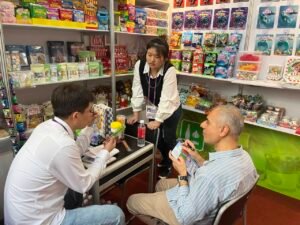
Next, move from paper to production. Request a live video call — not an edited clip — and ask the camera to walk from the raw-material store to the cooking or mixing area, the forming line, the cooling tunnel and the packing hall. A genuine manufacturer can show you the line that matches your product category in real time; an intermediary stalls, reschedules, or sends the same generic video to every buyer.
Then check scale honestly. A real supplier should be able to describe its capacity in terms of a multi-factory supply chain and 30+ production lines, and to explain which facility would handle your order and why. Ask what happens when one line is fully booked — a factory with real depth answers with a plan; a reseller answers with a promise.
Finally, test responsiveness on something technical. Ask how they would adjust a recipe for humidity, or how they control piece weight across a run. Specific, process-level answers are hard to fake.
What Does the Candy Production Process Tell You?
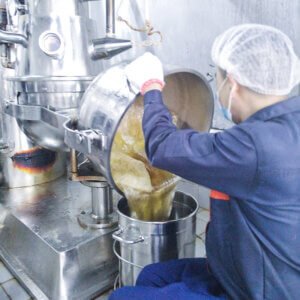
Ask the supplier to walk you through the candy production process for your specific product: ingredient intake and weighing, cooking or mixing, depositing or molding, cooling and conditioning, then wrapping, metal detection and packing. You are not looking for trade secrets — you are looking for a documented sequence with control points. A documented process means your second order will resemble your first, and that a defect can be traced back to a stage rather than blamed on the batch. You can see how this is described for real products on the OEM/ODM marshmallow product page and the wholesale gummy candy page.
Which Candy Export Certifications Actually Matter to Your Buyer?
Certificates are the easiest thing to fake and the easiest thing to verify — which makes them the best filter you have. Do not accept a JPEG. Ask for the certificate number, the issuing body, the certification scope, and the expiry date, then confirm it with the issuer.
Three families cover most of what an overseas candy buyer needs:
- Global food-safety standards. BRCGS and FSSC 22000 are the benchmarks most retail and private-label buyers in Europe and North America ask for. What matters to you is not the logo but the scope: a certificate that covers the product type and site that would actually make your order.
- Food-safety management systems. ISO 22000 shows that a documented management system is in place, which supports consistency across repeat orders.
- HACCP discipline. The FDA’s HACCP principles and application guidelines describe the hazard-control logic a factory should be able to demonstrate in its own plan.
What this means for you: certification is not decoration — it is what allows your retail customer to accept your shipment. Confirm it before the deposit, because retrofitting compliance after production is far more expensive than choosing a compliant partner first. Exact certificates and their scope are confirmed per product and project.

What MOQ, Pricing and Lead Time Should You Expect?
MOQ is where most first-time buyers lose leverage, because they compare a candy quote to a T-shirt quote. Candy is a food product with tooling, cooking batches and packaging minimums attached. For many candy products, the typical MOQ is approximately 2–4 metric tons per flavor, depending on formula, shape, production process and packaging requirements.
That number is not a negotiating trick; it is driven by real constraints. Changing flavor means cleaning and re-setting the line. A custom shape means a new mold. A custom bag or box means a printing run. Ask any supplier to explain which of these drives your MOQ — the answer tells you whether they understand their own line.
On pricing, ask three questions: how long is the quoted price valid, what is included (packaging, artwork, cartons, pallets), and what triggers a re-quote. On lead time, separate it into sampling, bulk production and shipping, and ask for each in writing. Timelines depend on formula development, tooling and packaging, so exact figures are confirmed per product and project rather than promised as a single blanket number.
What this means for you: a supplier who separates these three timelines is easier to plan around — and easier to hold to — than one who gives you a single optimistic date.
What Does a Good Private Label and OEM Partnership Look Like?
The strongest signal that you have found a private label candy supplier rather than a reseller is that they can work upstream from a finished product. A capable OEM candy manufacturer should support OEM/ODM, private label, custom formula and custom packaging, backed by R&D support and 30+ production lines. In practice that means they can help you move from a reference sample to a workable recipe, then to a retail-ready pack, without sending your project to a third party.
Ask how they handle a custom formulation request: do they offer a sample round before bulk, will they adjust sweetness or texture, and can they match a target piece weight and shape? For a bulk candy supplier relationship to last, the process should be repeatable, not a one-off favour. You can see how this is structured on our About page, and how custom shapes and novelty formats are handled on the candy toy product page.
Choose the partner whose skill is the process, not a single product. When your line-up changes next season, the relationship still holds.

Frequently Asked Questions About Choosing a Candy Manufacturer in China
1. How do I know if a Chinese candy supplier is a real factory?
Match three things: the business license, the bank account and the company issuing the quote. Then ask for a live, unedited walkthrough of the line that would run your product. If all four line up and the supplier can answer technical questions about the process, you are dealing with a factory rather than an intermediary.
2. What documents should I request before placing an order?
Request the business license, the food production license, a current food-safety certificate with its scope and expiry date, a third-party lab report drawn from production, and the certificate of origin format. Confirm each with the issuing body rather than relying on a scan.
3. What is the typical candy MOQ for private-label production?
For many candy products, the typical MOQ is approximately 2–4 metric tons per flavor, depending on formula, shape, production process and packaging requirements. Ask the supplier to explain which factor — flavor change, mold, or packaging — drives your specific minimum.
4. Can a Chinese factory make my own recipe and packaging?
Yes, if the supplier offers OEM/ODM, custom formula and custom packaging with R&D support. Ask for a sampling round before bulk production, and confirm who owns the artwork and the mold. Exact terms are confirmed per product and project.
5. How long do sampling and production take?
Timelines depend on formula development, tooling and packaging. Ask for sampling, bulk production and shipping to be quoted as three separate stages in writing, rather than as one combined estimate. Exact schedules are confirmed per product and project.
6. Should I pay a deposit before a factory audit?
No. Verification should come first. Complete the identity check, the live walkthrough and the document review before any payment, and structure the deposit against clear milestones once you are satisfied.
If you would like to see the answers for yourself, send MPS Candy your product brief: candy type, target volume, packaging format and destination market. We will confirm the matching production line, the MOQ, the packaging options and the documentation set for your project — and if your product is not a fit, we will tell you. Take the six rows from the checklist above and apply them to every supplier on your shortlist — including us.